Install R Commander
Download pdf file of this page
Introduction
For beginning (bio)statistics students who need R, I recommend use of the graphic user interface, GUI, R Commander. R Commander is an R package. It’s a large package, and requires installation of many additional packages. Generally, these additional required packages are also installed with the installation of R Commander.
This page provides a guide about how to install R Commander onto your computer (LDE). To use R Commander, please see Chapter 1.1 – A quick look at R and R Commander. You must have R installed and working correctly on your computer before proceeding to install the R Commander package. Click here to get the Install R guide.
Note 1: If you plan to run R in the Cloud, you cannot install the R Commander package, which must be part of a local development environment.
Installation guides quickly become outdated. This page last updated 12 August 2025 and describes working installation protocols at that time. Like all secondary guides to software installation, I recommend reading installation notes by the coders who provide the software. For R Commander, see R Commander Installation Notes, by Dr John Fox.
For your convenience, the example R code I run is listed below
myX <- c(1,2,3,4)
myY <- c(5,10,15,20)
plot(myY, myX)
For BI311, we also use R Commander
R Commander is a package that adds function to R; it provides a familiar point-and-click interface to R, which allows the user to access functions via a drop-down menu system (Fox 2017). Thus, instead of writing code to run a statistical test, Rcmdr provides a simple menu driven approach to help students select and apply the correct statistical test. R Commander also provides access to Rmarkdown and a menu approach to rendering reports.
RStudio is another way to interact with R, and compared to R Commander, is designed to help R programmers with a useful environment to manage files, generate reports, and work on R code. I continue to use R Commander in teaching because it emphasizes statistics and note coding. One advantage of R Commander for learning how to code with R is that code is reproduced from student’s selections in the drop-down menu options.
Note 2: A couple of years ago the folks at Posit, who publish RStudio, introduced the IDE Positron. I won’t comment about this IDE, but point interested readers to a page at R-Bloggers: Positron vs RStudio – is it time to switch?
Install R Commander
To install R Commander, enter the following code at the R prompt. See Figure 1 below for a screenshot of the R Commander interface.
install.packages("Rcmdr")
In addition, download and install the plugin
install.packages("RcmdrMisc")
Note: You can combine requests as follows
install.packages("Rcmdr", "RcmdrMisc", dependencies=TRUE)
Adding “dependencies=TRUE” will also install other packages that Rcmdr needs (which would get downloaded once you start Rcmdr for the first time).
If you have not set a mirror site, you’ll be prompted to do so before you can download and install packages. I recommend 0-Cloud as default mirror site. Be advised: because our university shares a single public IP address, you may experience download delays if we all try to use the same mirror site at the same time.
To start R Commander, load the packages via the library() command.
library(Rcmdr)
Follow installation prompts. You can skip adding the “otools,” for now. However, Rcmdr will prompt you to install otools every time you start, so go ahead and install them at your convenience.
MacOS users: To improve Rcmdr performance you must turn off “app nap.” From Rcmdr, go to Tools, then select “Manage Mac OS X app nap for R.app …” Once you select “off” (click OK to apply), restart Rcmdr, the delay will be removed. Windows 11 folks don’t have to contend with nap.
Test Rcmdr
Figure 1 shows a basic R Commander session. Enter code in the script window (1), click on the Submit button to run the code, and results show up in the output window (2). Figure 1 shows R Commander opened in a MDI.
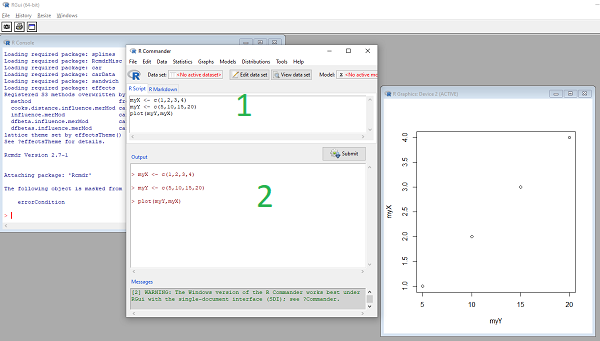
Figure 1. Screenshot of basic R Commander session on WinPC.
Click on R Markdown tab, edit (e.g., replace with your own title and name), then click on the Generate Report button to create a pdf of your work, default file name is RcmdrMarkdown.pdf (Fig 2). If you do not have pandoc and LaTeX properly installed, then only an HTML document will be available as an option.
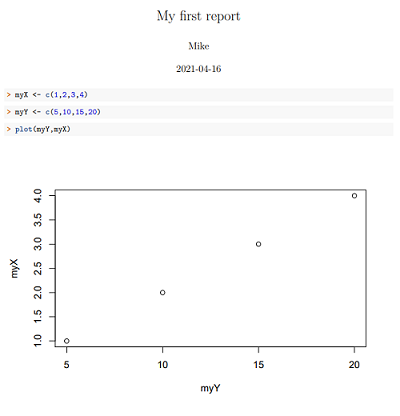
Figure 2. Screenshot of portion of RcmdrMarkdown.pdf.
Although I don’t recommend this practice, you can run R Commander from within RStudio. The downside is that multiple windows may be generated (Fig 3), which can be challenging for new users to navigate. On Windows pc some of this behavior can be controlled by selecting the SDI windowing option as opposed to the default MDI windowing option.

Figure 3. Screenshot of basic R Commander session in RStudio on macOS.
Note 5: Recent versions of macOS offer “Stage Manager” and “Split View” options which can help manage a project that requires two or more apps open and available for use. On Windows PCs, Snap Layouts allow up to four apps to be quickly arranged for easy access.
Add pandoc and LaTex support
To complete your R Commander installation you may want to add additional document handling software, LaTex and pandoc. R Commander already contains R Markdown, but these additional software allow you to take advantage of “high-quality typesetting.”
Note 6: BI-311 students: It’s not necessary to install pandoc and LaTeX. With the included RMarkdown options in R Commander, the default page generated is an html (web) document, which will be displayed in the default browser. BI-311 reports are submitted as pdf files — therefore, it’s a straightforward to save the html page as a pdf within the browser. For example, Google Chrome select Print, then select save as pdf for the destination.
In Rcmdr, select Tools from the menu, then Install Auxillary Software. Click OK, which will open links in your default browser to download pages for LaTex and pandoc. Download the files, follow the installation instructions for pandoc and LaTeX, then restart R and Rcmdr.
Here are direct links to the files, plus installation notes
LaTeX — links verified 27 August 2025
MikTeX from https://miktex.org/download:
- for Windows systems, select
basic-miktex-24.1-x64.exe - for MacOS, select
miktex-22.1-darwin-x86_64.dmg
pandoc — links verified 12 August 2025
Windows 11
https://github.com/jgm/pandoc/releases/download/3.7.0.2/pandoc-3.7.0.2-windows-x86_64.msi
MacOS
ARM CPU (M1 – M4): https://github.com/jgm/pandoc/releases/download/3.7.0.2/pandoc-3.7.0.2-1-arm64.deb
INTEL CPU: https://github.com/jgm/pandoc/releases/download/3.7.0.2/pandoc-3.7.0.2-x86_64-macOS.pkg
/MD